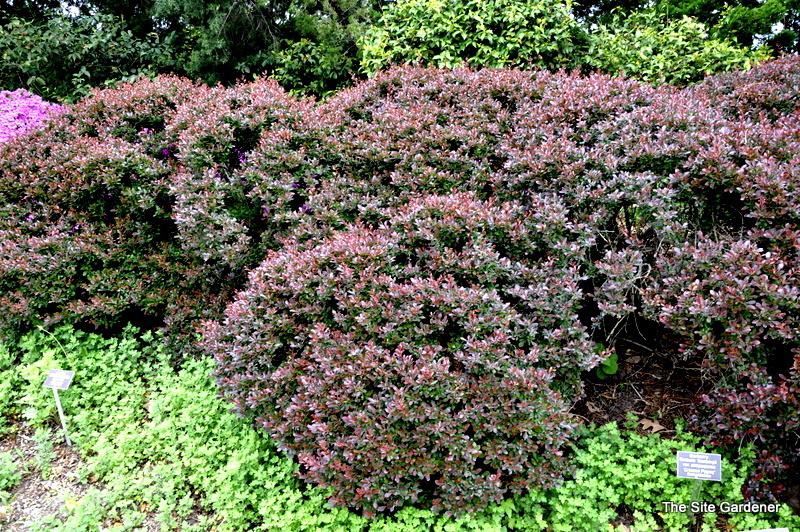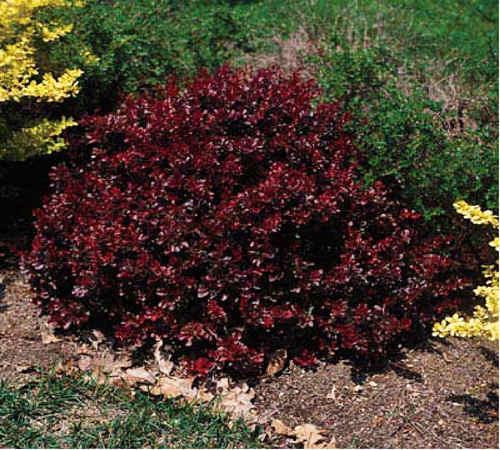

Berberis thunbergii f. atropurpurea 'Crimson Pygmy'
Common Name: Crimson Pygmy Barberry, Purpleleaf Japanese Barberry
Berberis thunbergii f. atropurpurea ‘Crimson Pygmy’ — commonly known as Crimson Pygmy Japanese Barberry — is a classic dwarf purple barberry valued for its deep crimson-red foliage, compact habit, and rugged adaptability. It has been a landscape staple for decades, especially where a low, colorful shrub is needed.
Small yellow flowers appear in spring, followed by bright red berries in fall that persist into winter.
Key features
Width / spread: 2–3 ft
Height: 2–3 ft
Foliage: Deep crimson to burgundy-purple; bright red fall color
Flower color: Yellow (spring, not showy)
Fruit: Red berries (fall–winter)
Form: Dense, rounded mound
Life cycle: Deciduous shrub
Growing conditions
Sun: Full sun (best foliage color) to light shade
Soil: Well-drained; highly adaptable
Water: Low to moderate; drought tolerant once established
Hardiness:
-
Zone Low: 4a
-
Zone High: 8b
Landscape use
Low hedges and borders
Foundation plantings
Mass plantings for foliage contrast
Rock gardens
Barrier plantings (thorny stems)
Notes
One of the original dwarf purple barberries
Very tough and adaptable; tolerates urban conditions
Spiny stems provide deer and rabbit resistance
Responds well to pruning if size control is needed
Check local regulations, as Japanese barberry is restricted in some regions
|
| ||||||||||||||||||||||||||||||||||||||||