SEARCH PLANT
Powered by

Nandina domestica 'Nana Purpurea'
Common Name: Dwarf Nandina
Nandina domestica ‘Nana Purpurea’
Dwarf Purple Heavenly Bamboo / Dwarf Purple Nandina
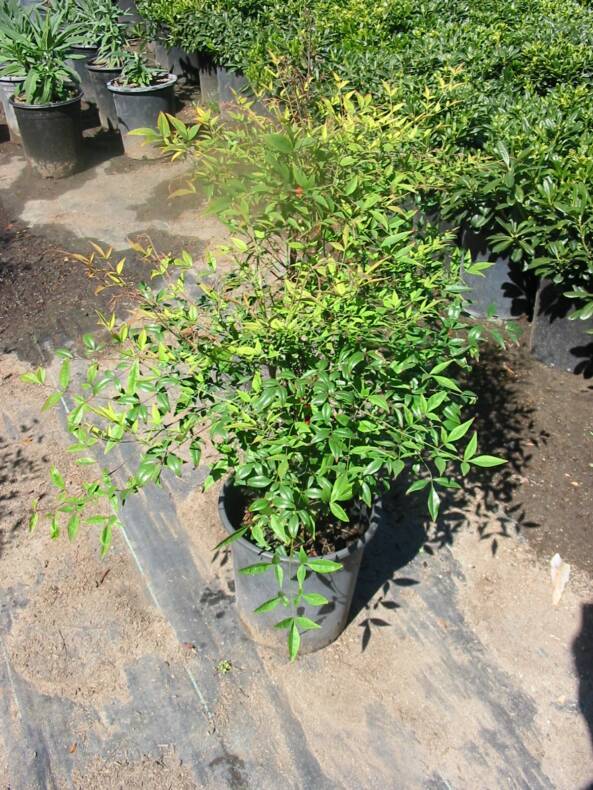
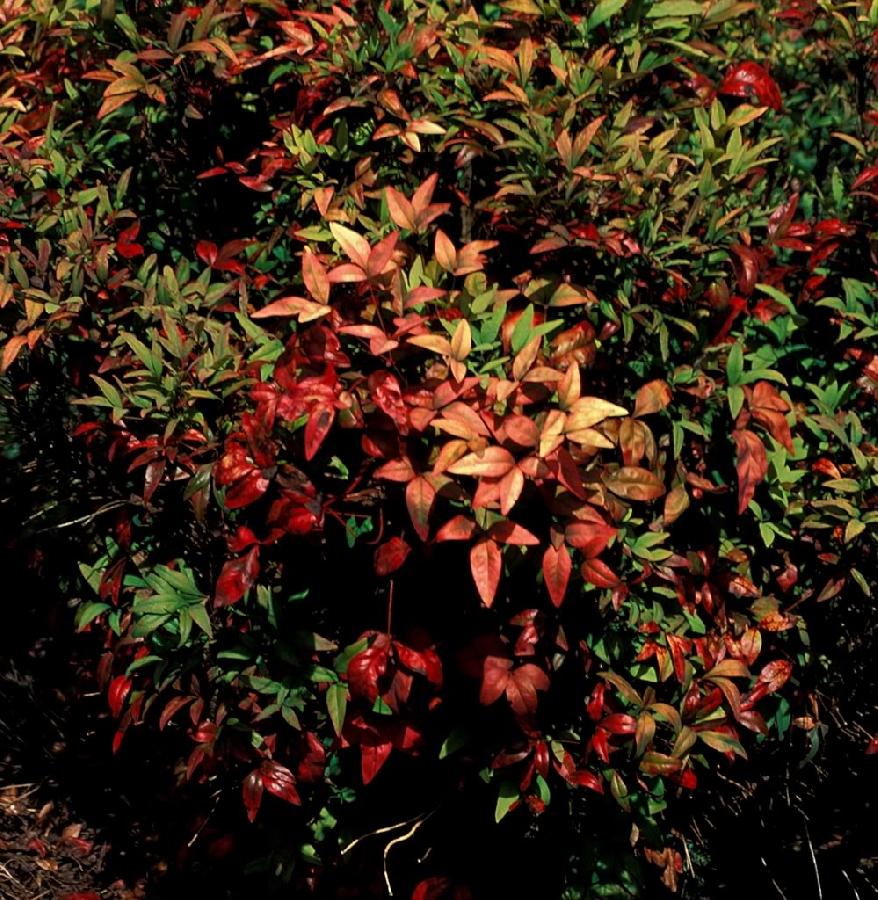
Nandina domestica ‘Nana Purpurea’ is a compact evergreen to semi-evergreen shrub valued for its dense, rounded habit and colorful foliage. The leaves are usually green to purple-green in summer, with cooler weather bringing stronger red, burgundy, and purple-red tones in fall and winter. This dwarf selection is mostly grown for foliage color rather than flowers or berries, and it works well as a low border, mass planting, foundation shrub, edging plant, or container accent. Devil Mountain Nursery describes it as rarely flowering and maturing around 2–3 ft. tall and wide.
Type: Broadleaf evergreen / semi-evergreen shrub
Mature Size: 2–3 ft. wide × 2–3 ft. tall
USDA Zones: 6a–10b
Form: Compact, low, rounded mound
Light: Full sun to part shade; best red-purple winter color with good sun
Soil / Water: Average, well-drained soil; low to moderate water once established
Bloom Time / Length: Rarely flowers; when present, small white flowers may appear in spring to early summer
Wildlife: Flowers, if present, may attract bees; fruiting is usually limited, but nandina berries are toxic to birds, pets, and people if eaten in quantity.
Features & Landscape Uses:
Good for year-round foliage interest, small foundation beds, low hedges, edging, mass plantings, Asian-style gardens, mixed shrub borders, and containers. Its compact size makes it useful where taller nandinas would be too large. Because Nandina domestica can spread by rhizomes and is invasive in some regions, especially warmer southern areas, it should be used cautiously and monitored. Oregon State notes that nandina spreads by rhizomes, and NC State lists the species as weedy/invasive in parts of the Southeast.
Care:
Plant in well-drained soil and water regularly during establishment. Once established, it is fairly adaptable and can tolerate some drought. Prune selectively in late winter or early spring by removing old or damaged stems at the base; avoid heavy shearing so the plant keeps its natural rounded form. More sun usually improves winter foliage color, while afternoon shade can help in hot climates.
| Plant Type: | Broadleaf Evergreen |
| Width: | 2'-3' |
| Height: | 1/ |
| Fragrant: | Not verified |
| Fruit: | Not verified |
| Growth Rate | Moderate |
| Zone: | 6–9 |
| Deer Resistant: | Yes |
| Salt Tolerant: | Not verified |
| Drought Tolerant: | No |
| Exposure: | Full Sun, Partial Shade, Full Shade |
| Bloom Time: | Late Spring, Early Summer |
| Bark Type: | Smooth |
| Landscape/Use: | Foundation, Mass Planting, Hedge, Foundation Plant, Border |
| Shape: | Compact, Mounded, Dense |
| Soil Type | Moist well-drained, Average |
| Flower Color: | White |
| Leaf Color: | Crimson, SeaGreen |
| Fall Color: | Brown |